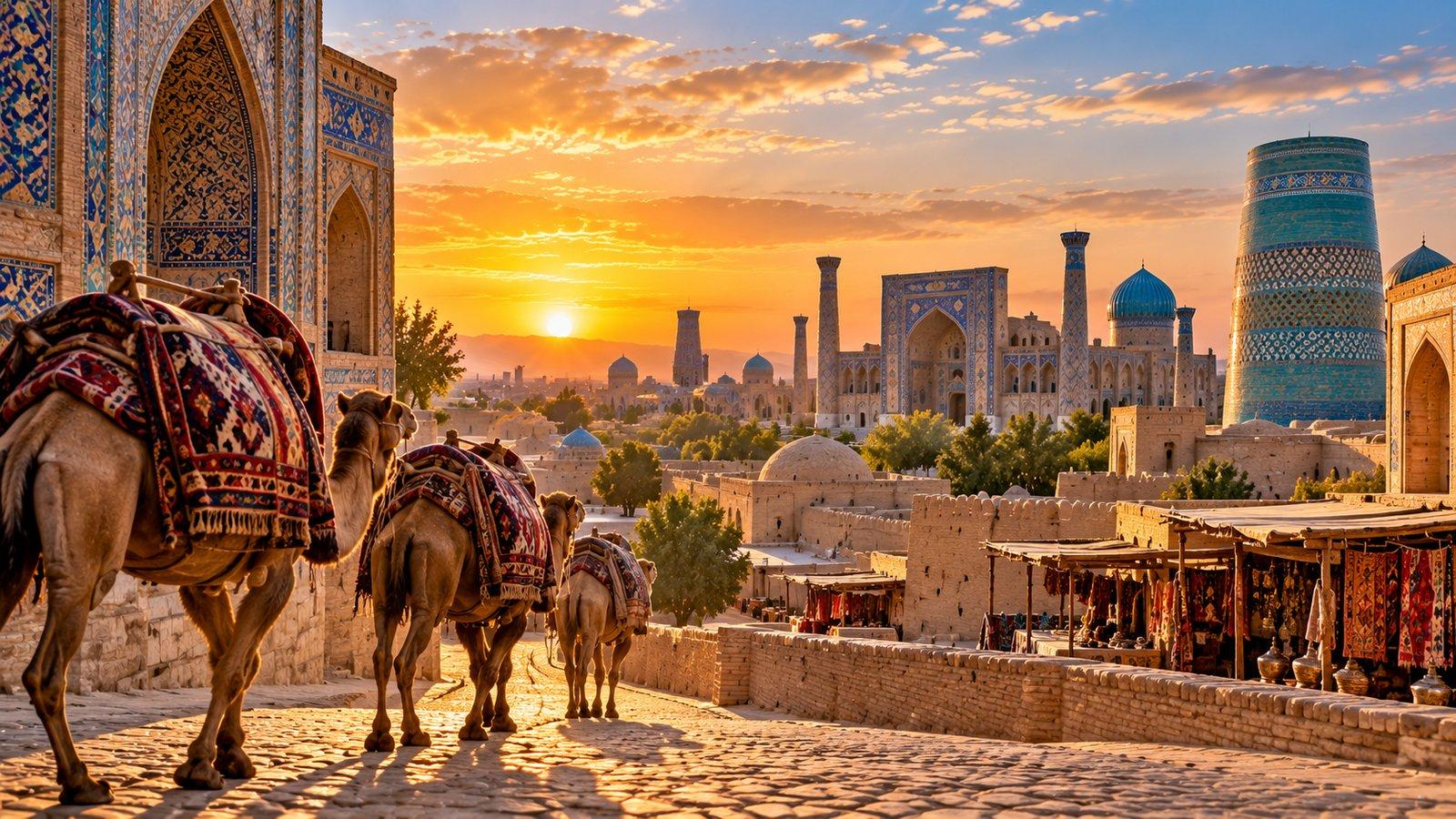
The best Uzbek souvenirs are handmade crafts that are still produced in family workshops: embroidery, silk, ceramics and paper. Buying them where they are made is part of the trip — you see the work, meet the masters and know what you take home.
1. Suzani embroidery
Large embroidered textiles with flowers, pomegranates and suns, once part of a bride’s dowry. Bukhara, Samarkand and Nurata each have their own style. Hand-stitched pieces have slightly uneven lines; machine work looks perfectly regular.2. Ikat silk (adras and atlas)
The blurred, colourful patterns are dyed into the threads before weaving. The Yodgorlik silk factory in Margilan shows every step, from cocoons to the loom. Scarves are light and easy to pack.3. Rishtan ceramics
Plates and bowls in turquoise and cobalt blue from the town of Rishtan in the Fergana Valley, made with a traditional plant-ash glaze. Workshops pack them for travel.4. Gijduvan ceramics
Warm brown, yellow and green pottery from Gijduvan near Bukhara — a different style from Rishtan and a good stop on the way to the desert.5. Samarkand silk paper
Hand-made from mulberry bark at the Konigil paper workshop just outside Samarkand, using a centuries-old method. Notebooks and cards make light gifts.6. Bukhara stork scissors
Forged scissors shaped like a stork, made by blacksmiths in Bukhara’s old trading domes. Pack them in checked luggage.7. Doppi skullcaps
The embroidered four-sided caps are worn across Uzbekistan; patterns differ from region to region.8. Carpets
Workshops in Bukhara and Khiva weave silk and wool carpets with traditional patterns. Ask for a receipt — older carpets and antiques may need an export certificate.9. Miniature painting and woodcarving
Bukhara is known for miniature painting, Khiva for carved wooden columns, doors and small boxes.10. Spices, dried fruit and nuts
Apricots, raisins, almonds and spice mixes for plov from Siab Bazaar in Samarkand or Chorsu Bazaar in Tashkent.Buying tips
- Bargaining is normal in bazaars and souvenir stalls, less so in workshops with fixed labels.
- Carry some cash; small stalls rarely take cards.
- Keep receipts for larger purchases, especially carpets and antiques.
- Ceramics and scissors travel best in checked luggage, well wrapped.