Bukhara is the easiest of the great Silk Road cities to explore on foot. Almost everything worth seeing lies inside or close to the old town, and the distances are short. Here are the sights in a sensible order, with a few beyond the centre.
1. Ismail Samani Mausoleum
Start in the park west of the old town. The mausoleum of the Samanid dynasty dates from the early 10th century and is one of the oldest Islamic buildings in Central Asia. It is small, but the brickwork is laid in patterns so fine that the light changes the building through the day. Next to it stands Chashma-Ayub, a shrine over a spring, with a small museum about water in the desert.
2. The Ark
The walled fortress was the residence of the emirs of Bukhara until 1920. Inside are courtyards, a throne room, a mosque and small museums. Even from outside, the sloping walls are one of the city’s best views.
 The trip in this storyBukhara Old City Highlights - Day Tour1 day · from $35 →
3. Bolo Hauz Mosque
Across the square from the Ark, this mosque from 1712 has a deep wooden porch on twenty slender carved columns, which are reflected in the pool in front of it.
4. Poi Kalyan: minaret, mosque and madrasa
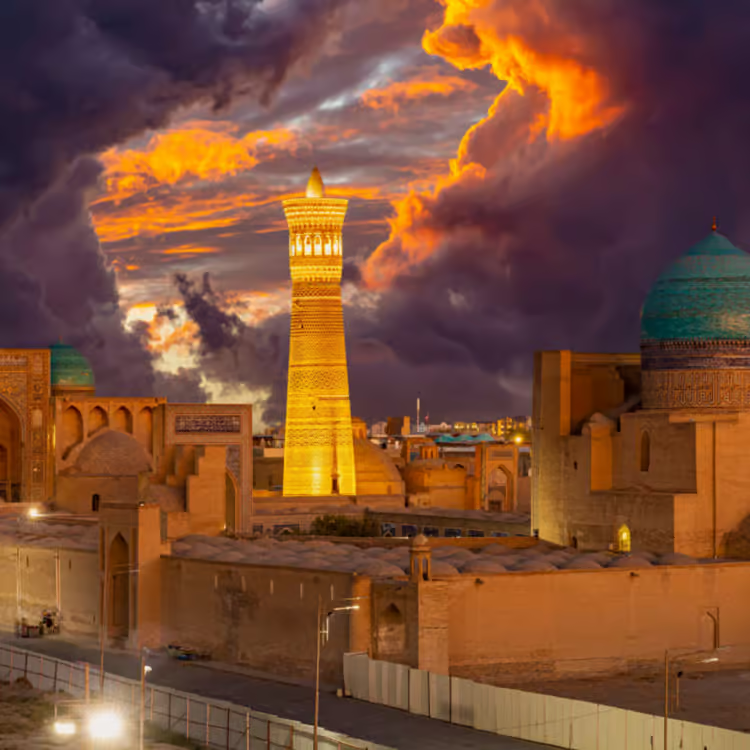
The Kalyan Minaret was built in 1127 and is about 47 metres tall; legend says even Genghis Khan spared it. It stands between the large Kalyan Mosque and the Mir-i-Arab Madrasa, which is still a working religious school. Come back at sunset, when the square turns gold.
5. Ulugh Beg and Abdulaziz Khan madrasas
Two madrasas face each other a short walk away. The Ulugh Beg Madrasa (1417) is the oldest of the three built by the astronomer-ruler. The Abdulaziz Khan Madrasa opposite, from the 17th century, has richly painted decoration.
6. The trading domes
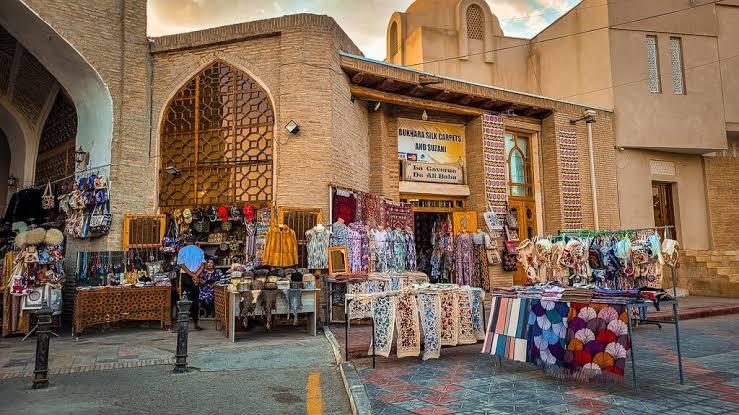
Three covered bazaars from the 16th century sit at old crossroads: Toki Zargaron (jewellers), Toki Telpak Furushon (cap makers) and Toki Sarrofon (money changers). Today they sell ceramics, suzani, knives and carpets. Look around before you buy and bargain politely.
7. Magoki Attori Mosque
This mosque sits several metres below today’s street level, which shows how much the ground has risen over the centuries. It is one of the oldest places of worship in the city.
8. Lyabi-Hauz
The ensemble around a 17th-century pool is the heart of the evening. The Nadir Divan-Begi Madrasa has unusual mosaics of birds and faces on its portal, and the Kukeldash Madrasa is one of the largest in Central Asia. Tea houses around the water stay busy until late.
9. Chor Minor
A small gatehouse from 1807 with four turquoise-capped towers, tucked in a residential street east of Lyabi-Hauz. Few tour groups stay long, so it is a quiet stop.
10. Sitorai Mohi Khosa
The summer palace of the last emirs lies a few kilometres north of the city. It mixes Russian and local styles and has rooms full of porcelain and costumes.
11. Bahauddin Naqshband complex
About 12 km from the centre is the shrine of the founder of the Naqshbandi Sufi order, one of the most visited pilgrimage sites in Uzbekistan. Dress modestly. Read more in our guide to Bukhara’s Sufi heritage.
12. A craft workshop
Bukhara is known for gold embroidery, forged knives, puppets and miniature painting. Many workshops in the old town let you watch the work, which is the best way to understand what you buy.
How many days do you need?
One full day covers the old town at a fast pace. Two days let you add the palace, the Naqshband complex and slow evenings at Lyabi-Hauz. In summer, plan walks for the morning and late afternoon: July and August are very hot.
Getting to Bukhara
From Samarkand you can take the train or a private car; we compare the options in Samarkand to Bukhara: train or car. Our private transfer has a fixed price per car and can stop on the way.
See it on a tour
Our Bukhara old city highlights tour covers the main sights with a local guide, and Bukhara is part of our multi-day itineraries.