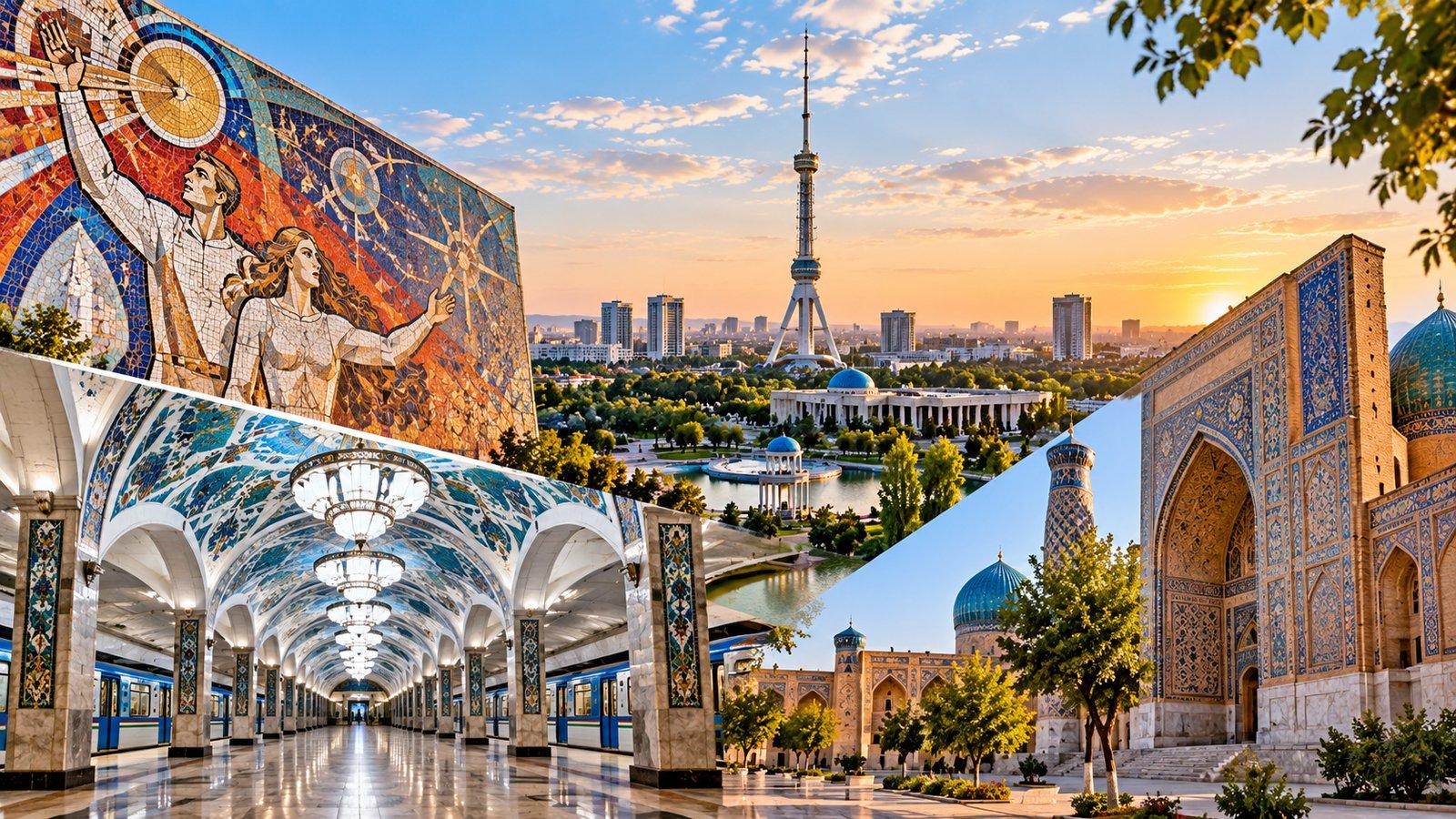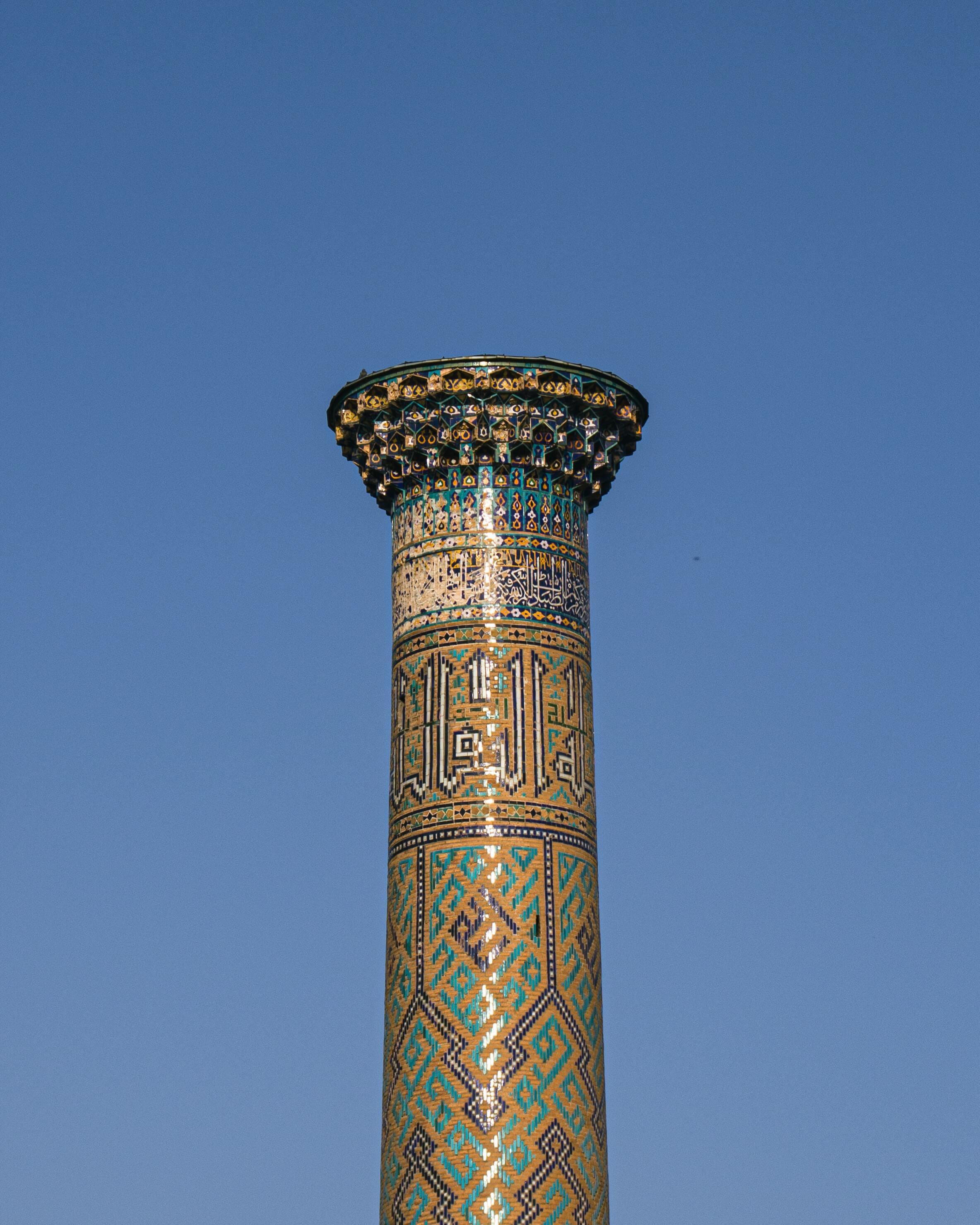
Khiva is the most complete old town in Central Asia. The inner city, Itchan Kala, is still enclosed by its mud-brick walls, and inside them madrasas, minarets, palaces and houses stand side by side in a space you can cross on foot in fifteen minutes. It became Uzbekistan’s first UNESCO World Heritage Site in 1990.
Itchan Kala: one ticket, many doors
Most visitors enter through the West Gate, where you buy the combined ticket for the museums inside the walls. A few places, such as the Islam Khodja minaret and some watchtowers, charge a small extra fee. The lanes themselves are free to walk at any hour, and early morning and evening are the best times for photos.
1. Kalta Minor
The short, fat minaret covered in turquoise tiles is the symbol of Khiva. It was meant to be the tallest minaret in the Islamic world, but work stopped in the 1850s and it was never finished. Today that is exactly what makes it memorable.
 The trip in this storyUzbekistan Silk Road & Ancient Khorezm – 11 Days11 days · from $1350 →
2. Kunya Ark
The old fortress of the khans, with a summer mosque, a throne hall, a mint and a harem. Climb the Ak Sheikh Bobo watchtower for a view over the whole city: it is the most popular spot at sunset, so come a little early.
3. Juma Mosque
A large hall without a dome, its roof carried by more than 200 carved wooden columns. Some of them are many centuries old and were reused from earlier buildings. The light falling through the openings in the roof makes it one of the quietest places in the city.
4. Islam Khodja minaret and madrasa
Built in the early 20th century, this is the tallest minaret in Khiva. The climb is steep and narrow, but the view over the domes and the desert beyond is worth it. The small madrasa next to it holds a museum of applied art.
5. Pahlavan Mahmud Mausoleum
The resting place of a poet, furrier and wrestler who became the patron saint of Khiva. The tiled inner rooms are some of the finest in the city, and it is still an active place of pilgrimage, so dress modestly and be quiet inside.
6. Tash Hauli Palace
The palace of Allakuli Khan, with its harem courtyard of blue tiles and carved wooden columns on stone bases. Together with the Kunya Ark, it shows how the khans actually lived.
7. The city walls
You can walk on a section of the wall near the North Gate. In the late afternoon the clay turns golden and the minarets stand out against the sky.
Beyond the walls
The outer city, Dishan Kala, has the Nurullaboy Palace, built for the last khans with European tiles and stoves. A half-day trip into the desert takes you to the Khorezm fortresses such as Ayaz-Kala and Toprak-Kala. We describe them in our article on the desert fortresses of Khorezm.
How many days?
One full day covers the main sights of Itchan Kala. Two nights let you see the town in the evening and early morning, when the tour groups are gone, and add the desert fortresses.
How to get to Khiva
Khiva is far from the other Silk Road cities, so plan this part carefully.
By plane: flights from Tashkent land in Urgench, about 30 km from Khiva. A taxi or transfer takes around 40 minutes.
By train: Khiva has its own railway station, with trains from Tashkent, Samarkand and Bukhara. They are slower than the Afrosiyob between Tashkent and Bukhara, and some run overnight. Check the current timetable and book early in high season.
By car from Bukhara: about 450 km through the Kyzylkum desert, often along the Amu Darya river. Plan 6 to 7 hours with stops. It is a long day, but the desert road is part of the experience.
Khiva in a longer route
Most travellers combine Khiva with Bukhara and Samarkand. A common order is to fly from Tashkent to Urgench, visit Khiva, drive across the desert to Bukhara, and continue to Samarkand. Our 11-day Silk Road tour includes Khiva and the Khorezm fortresses. For shorter ideas, see our Uzbekistan itineraries, and for background read Khiva, the medieval city.